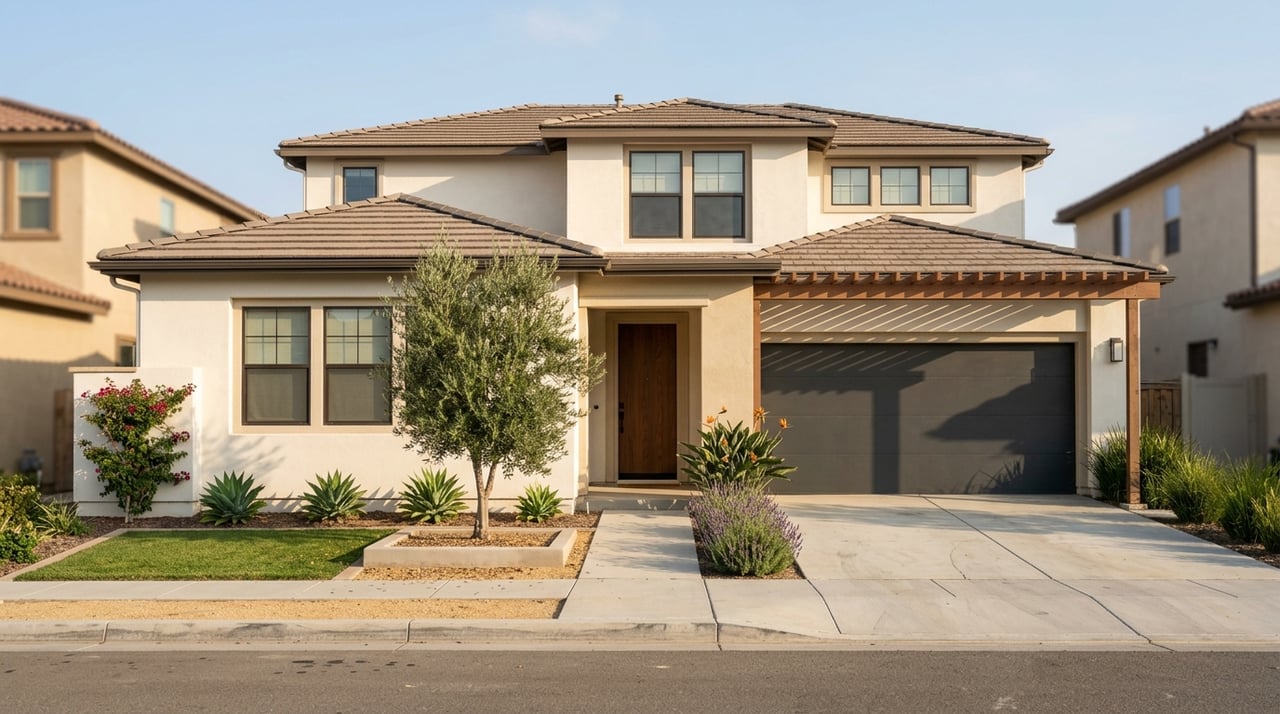
Comparing Chula Vista Neighborhoods For Move-Up Buyers
June 18, 2026
June 18, 2026
Wondering which part of Chula Vista makes the most sense for your next home? If you are a move-up buyer, the answer usually comes down to more than price alone. You are likely weighing space, ownership costs, commute patterns, and the kind of daily lifestyle you want, so this guide will help you compare the main tradeoffs clearly. Let’s dive in.
When you move up within Chula Vista, you are not just buying more square footage. You are also choosing between different neighborhood layouts, home styles, and monthly ownership costs.
In broad terms, Eastlake and Otay Ranch lean toward newer planning, community amenities, and more predictable subdivision living. Older and West Chula Vista tend to offer more variation in lot size, architecture, and access to the city’s historic core and transit options.
That means the best fit depends on what matters most to you. Some buyers want a more uniform neighborhood feel and built-in amenities, while others want larger lots, older-home character, or a more central location.
Eastlake is a 3,200-acre master-planned community with residential, commercial, industrial, and office uses. City materials also highlight more than 1,100 acres of parks, recreation, and open space, along with lake walking and biking, golf, and community parks.
For a move-up buyer, that usually translates into an amenity-rich suburban setting. If you want neighborhood recreation close to home and a community built around planned open space, Eastlake often checks that box.
Eastlake covers a wide range of housing types, which is important when you compare pricing. Recent sales in the broader Eastlake area included a 752-square-foot condo, a 1,166-square-foot attached home, and a detached 1987 single-family home on a 5,216-square-foot lot.
Because the area includes both attached and detached homes, the broad median price can look lower than some of its move-up subareas. In other words, if you are shopping for a larger detached home, the neighborhood label alone may not tell you enough.
Recent Eastlake examples included HOA dues, such as a detached home with a $120 monthly HOA and no Mello-Roos. That does not mean every Eastlake home will have the same costs, but it shows why you should review each property’s fee structure carefully.
For many buyers, Eastlake offers a middle ground. You may get the benefits of planned amenities and a well-defined neighborhood feel, while still seeing a mix of product types and costs depending on the subarea.
Otay Ranch is a much larger, village-based planned community. The city describes it as a 23,000-acre community made up of 11 urban villages with about 27,000 dwelling units, with mass transit and pedestrian-oriented mobility built into the plan.
The village cores are designed to keep commercial uses, parks, and schools within walking distance. For move-up buyers, that planning approach can create a strong sense of neighborhood convenience and a more structured day-to-day layout.
Compared with older parts of Chula Vista, Otay Ranch tends to skew more toward newer, association-managed housing. A recent Winding Walk sale was a 2005 single-family home with 2,844 square feet on a 5,207-square-foot lot, and other recent Otay Ranch sales included attached homes in the roughly 1,163 to 1,278-square-foot range.
That pattern suggests more predictability in home age and subdivision design. If you value a newer feel and a more consistent streetscape, Otay Ranch may stand out.
Otay Ranch examples also point to more recurring ownership costs. The Winding Walk example included a $120 monthly HOA and Mello-Roos.
For move-up buyers, this is one of the biggest tradeoffs to evaluate. You may gain newer planning, neighborhood amenities, and easier day-to-day management, but you should budget for monthly and tax-related costs that may be more common in these communities.
If Eastlake and Otay Ranch represent Chula Vista’s newer planned growth, older and West Chula Vista offer a different experience. The city describes established neighborhoods as having tree-lined streets, large yards, and historic homes, and it identifies walkability as a key feature in historic downtown and established neighborhoods.
The city also describes Third Avenue Village as the cultural center of Chula Vista. For buyers who want a neighborhood with more historical texture and stronger connection to the traditional urban core, this part of the city often deserves a closer look.
Housing in older and West Chula Vista tends to show more variation in both property type and lot size. Recent examples included a 1970 single-family home on a 7,000-square-foot lot with RV parking and a 1924 multi-family property on a 7,324-square-foot lot in a mixed-use and commercial-residential setting.
That variety can be a real advantage if you want flexibility. You may find larger lots, older-house character, or property types that are less common in newer master-planned communities.
The examples reviewed in West Chula Vista did not show HOA dues. That does not guarantee no fees in every case, but it does support the broader idea that older neighborhoods may offer more fee simplicity than newer association-managed areas.
The tradeoff is predictability. In established neighborhoods, home condition, architecture, and even zoning context can vary more from one block or property to the next.
Chula Vista offers a trolley system, an extensive roadway network, trails and pathways, and access to I-5, I-805, and SR-125. The city also notes that the Bayfront Shuttle connects shoreline destinations with downtown Chula Vista, Chula Vista Center, residential communities, parks, and existing trolley stations.
For move-up buyers, that citywide access matters because daily routines can feel very different depending on where you land. The eastern and western parts of Chula Vista are not interchangeable when it comes to errands, recreation, and regional travel.
Eastlake and Otay Ranch are built around internal convenience. Eastlake highlights lake recreation, while Otay Ranch is organized around walkable village cores, trails, and the Otay Ranch Town Center as a shopping, dining, and entertainment hub.
If you want neighborhood-scale amenities close to home, these eastern communities can be a strong fit. Many buyers like having parks, recreation, and everyday conveniences woven into the community plan.
Older and West Chula Vista are generally better aligned with transit, walkability, and access to the historic core and bayfront. If you value being closer to downtown Chula Vista, established street grids, and city access points, this side of town may feel more convenient.
For some move-up buyers, that convenience outweighs the appeal of newer subdivision living. It really comes down to whether you prioritize planned amenities or stronger connection to the older city fabric.
Chula Vista is competitive overall. Over the three months ending May 2026, homes received five offers on average, sold in about 21 days, and had a median sale price of $800,625.
That citywide snapshot is useful, but neighborhood and subarea data tell a more detailed story. For move-up buyers, broad labels can be misleading if you do not separate attached homes, detached homes, and specific submarkets.
Recent market figures show broad Eastlake at $568,809 with 41 days on market, Eastlake Greens at $962,926 with 10 days, Otay Ranch at $795,284 with 22 days, and West Chula Vista at $754,746 with 24 days.
The key takeaway is simple: subarea and product type matter more than the neighborhood name alone. A move-up buyer looking for a larger detached home may be shopping in a very different micro-market than someone looking at condos or attached homes in the same broader area.
Many move-up buyers start with one of three questions. Do you want the biggest lot, the newest feel, or fewer recurring fees?
Based on the examples reviewed, older West Chula Vista showed larger lot sizes, around 7,000 to 7,324 square feet. Eastlake and Otay Ranch detached examples were closer to 5,200 square feet.
If you want newer planning and a more uniform neighborhood design, Eastlake and Otay Ranch are usually stronger contenders. If you want more lot flexibility or older-home character, West and older Chula Vista may offer more options.
If monthly costs are a major concern, pay close attention to HOA dues and Mello-Roos. Recent Eastlake and Otay Ranch examples included HOA dues, and the Otay Ranch example also carried Mello-Roos, while the West Chula Vista examples did not show HOA dues.
A smart move-up search starts with your non-negotiables. Before you tour homes, define what matters most in your next stage of ownership.
You may want to rank these factors:
Once you know your priorities, compare homes by subarea instead of broad neighborhood name. That approach helps you avoid false comparisons and focus on homes that truly match your budget and lifestyle.
In Chula Vista, the core tradeoff is clear. Eastlake and Otay Ranch offer newer planning, amenity density, and generally more predictable ownership patterns, while older and West Chula Vista offer more character, larger and more varied lots, and stronger access to transit and the urban core.
There is no single best neighborhood for every move-up buyer. The right choice depends on how you balance space, cost, convenience, and the kind of everyday living you want next.
If you want a calm, step-by-step plan for comparing Chula Vista neighborhoods and timing your next move, Liz Garcia can help you sort through the options with clear guidance and local insight.
Contact Liz Garcia today to assist you with selling or buying your next home. She will work with you through every step. She understands the real estate process and believes in educating clients when selling or buying a home.
2300 Boswell Rd Ste 100 Chula Vista CA 91914