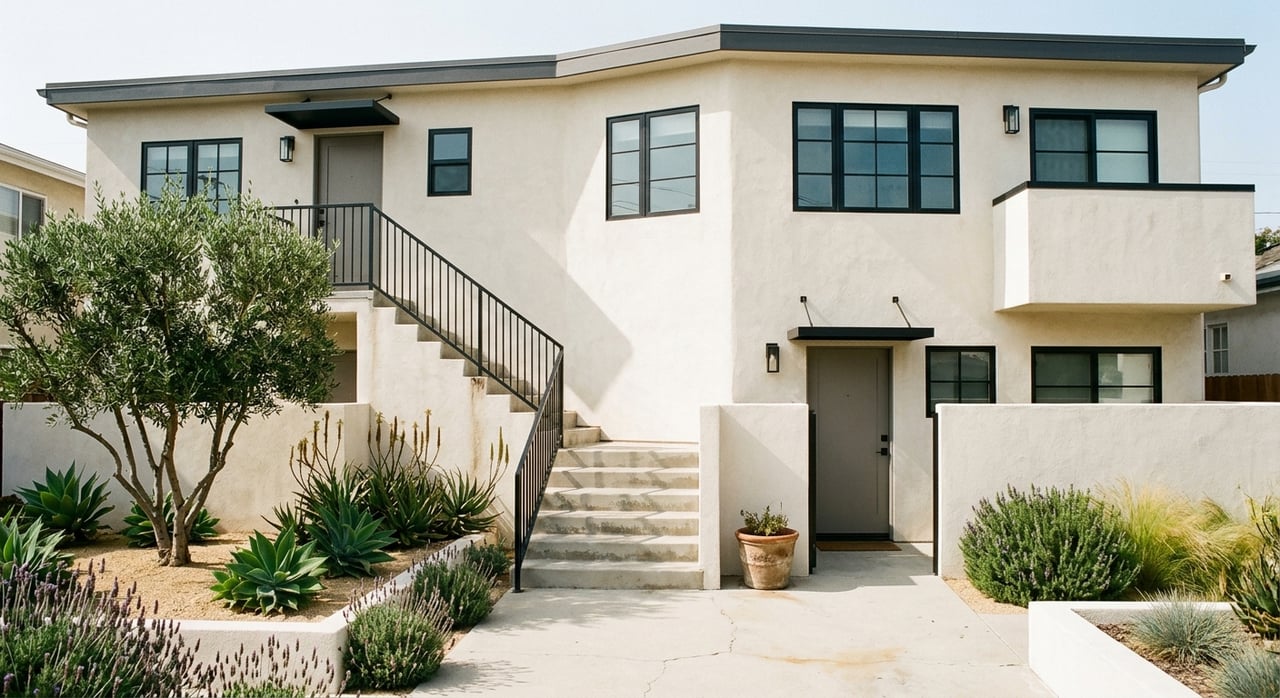
El Cajon 2-4 Unit Investments: What Buyers Should Know
April 23, 2026
April 23, 2026
If you are thinking about buying a duplex, triplex, or fourplex in El Cajon, the numbers can look promising at first glance. But small income properties here reward careful buyers, not rushed ones. When you understand the local rental base, older housing stock, and neighborhood-by-neighborhood pricing, you can evaluate opportunities with more confidence. Let’s dive in.
El Cajon offers something many investors want: a built-in renter base and a housing mix that leans heavily toward attached homes. According to the U.S. Census QuickFacts for El Cajon, the city has 103,291 residents and 33,890 households, with 41.5% of occupied housing units owner-occupied.
That matters because it points to a large share of households living in rental housing. El Cajon’s adopted Housing Element reports that 60.7% of occupied units were renter-occupied in 2018, and 54% of homes in 2020 were attached to another dwelling. For a buyer looking at 2 to 4 unit properties, that creates a useful local backdrop.
The same housing document also notes that El Cajon has limited remaining vacant land. Over time, that has helped the city become increasingly multi-family oriented. Compared with more land-constrained coastal areas, El Cajon can stand out as a market where smaller residential income properties remain an important part of the housing stock.
A 2 to 4 unit property usually includes a duplex, triplex, or fourplex. These properties often appeal to buyers who want rental income, a long-term hold, or a chance to live in one unit and rent the others.
In El Cajon, the opportunity is often tied to older buildings with room for operational improvement. That can mean better rents over time, but it can also mean more repair costs, more due diligence, and less room for overly optimistic assumptions.
For many buyers, the key is not just finding a property with upside. It is finding one where the upside still makes sense after you account for condition, taxes, vacancy, and realistic rent levels.
One of the biggest factors in El Cajon is age. The city’s Housing Element says 88% of the housing stock was over 30 years old, and 41% was at least 50 years old.
That age matters during underwriting. The city notes that homes over 30 years old often need minor repairs, while homes over 50 years old may need major rehabilitation, including roofing, plumbing, and electrical work. If you are reviewing a duplex or fourplex, those are not side issues. They can have a major impact on your actual return.
This is why buyers should look beyond cosmetic updates. New flooring and fresh paint may help with appeal, but they do not tell you whether the roof, sewer lines, electrical panels, or HVAC systems are nearing replacement.
In older multifamily properties, condition is part of the investment story. El Cajon estimated that about 250 housing units were in substandard condition, and the city has had a proactive inspection program for multifamily housing since 2017, according to the Housing Element.
That means your review should go further than a standard walk-through. In addition to an inspection contingency, it helps to evaluate permit history, code compliance, deferred maintenance, and major system age early in the process.
A strong due diligence checklist for an El Cajon 2 to 4 unit property should include:
In this market, separating true value-add potential from expensive repairs is critical.
Rent is one of the first numbers buyers look at, but it should be handled carefully. Zillow’s El Cajon rental market trends for April 2026 show an average rent of $2,150 across all property types and bedroom counts.
For larger units, the same source reports average rents of $2,233 for two-bedroom units, $3,195 for three-bedroom units, and $3,528 for four-bedroom units. For small residential investors, the two-bedroom and three-bedroom categories can be especially important.
The city’s Housing Element says renter households averaged 3.23 persons in 2019, compared with 2.96 for owner households. That supports paying close attention to 2-bedroom and 3-bedroom layouts when estimating demand and future leasing potential.
As a simple illustration, four units rented at El Cajon’s average two-bedroom asking rent would gross about $8,932 per month, or $107,184 per year, before vacancy and expenses, based on Zillow’s reported numbers. That is only a starting point, but it helps frame the discussion.
One of the easiest mistakes in small income property investing is assuming future rents will solve today’s thin margins. El Cajon’s market data suggests a more measured approach.
Zillow labels El Cajon’s rental market as “cool”, and reports that the city’s average rent was down $150 year over year. That does not mean there is no opportunity. It does mean your rent growth assumptions and lease-up timeline should stay conservative.
The city’s Housing Element also notes that a 5% to 6% vacancy rate is generally considered enough to balance supply and demand in the multifamily market. Any given building can perform differently, but that range is a useful benchmark when you model vacancy rather than assuming full occupancy all year.
A conservative underwriting approach often includes:
El Cajon rents are lower than San Diego overall, which can shape both investor strategy and tenant demand. Zillow’s San Diego rental market trends show an average rent of $2,990 citywide, compared with El Cajon’s $2,150.
That places El Cajon about 28.1% lower than San Diego on average rent, based on the figures in the research report. Nearby East County markets also trend higher in Zillow’s data, with La Mesa at $2,395, Spring Valley at $2,328, Lemon Grove at $2,572, and Santee at $2,929, as shown on Zillow’s El Cajon market page.
For some buyers, that lower-rent positioning may support steady demand from renters looking for relative value in the broader county. For investors, it also means you should be realistic about rent ceilings and avoid assuming a property can quickly match higher-rent submarkets nearby.
Not every El Cajon property should be analyzed the same way. Pricing and resale potential can vary meaningfully depending on location.
Zillow’s El Cajon home value snapshot shows citywide average home value at $816,317, down 2.1% year over year. The same source also shows variation within the area, with Bostonia around $725,741, Fletcher Hills around $960,466, and Granite Hills around $1,093,902.
For an investor, that range is a reminder that a few blocks can affect more than just the purchase price. It can also influence rent potential, renovation strategy, and eventual resale value. A property that looks similar on paper may perform very differently based on location, parking, layout, and surrounding housing stock.
Taxes are another line item buyers sometimes underestimate. San Diego County explains in its new homeowners property tax guide that California Proposition 13 generally limits the base property tax to 1% of assessed value, plus voter-approved bonds and fixed assessments.
The county also notes that a sale or new construction can trigger a supplemental tax bill. Annual secured tax bills are normally due in two installments: Nov. 1 to Dec. 10 and Feb. 1 to Apr. 10.
As a simple example, a $1.2 million purchase price implies about $1,000 per month in base property tax before bonds and assessments. That is why it is important to verify the parcel’s total tax rate and any additional charges before you rely on your projected cash flow.
If you are considering a 2 to 4 unit property in El Cajon, a calm, step-by-step review usually beats a fast yes or no decision. This market can work well for buyers who stay disciplined and focus on verified numbers.
A practical buying approach often looks like this:
El Cajon can be a plausible market for small residential investors, especially if you want to stay within San Diego County while targeting 2 to 4 unit properties. The local renter base, multifamily-oriented housing stock, and pricing below San Diego city levels can make it worth a closer look.
At the same time, this is not a market that rewards loose underwriting. Older properties, condition risk, inspection history, and conservative rent trends all point to the same takeaway: your numbers should be grounded, your repair budget should be realistic, and your due diligence should be thorough.
If you want help evaluating a duplex, triplex, or fourplex in El Cajon with a clear, low-pressure process, connect with Liz Garcia. You can get practical guidance, local market context, and step-by-step support as you decide whether a property truly fits your investment goals.
Contact Liz Garcia today to assist you with selling or buying your next home. She will work with you through every step. She understands the real estate process and believes in educating clients when selling or buying a home.

2300 Boswell Rd Ste 100 Chula Vista CA 91914